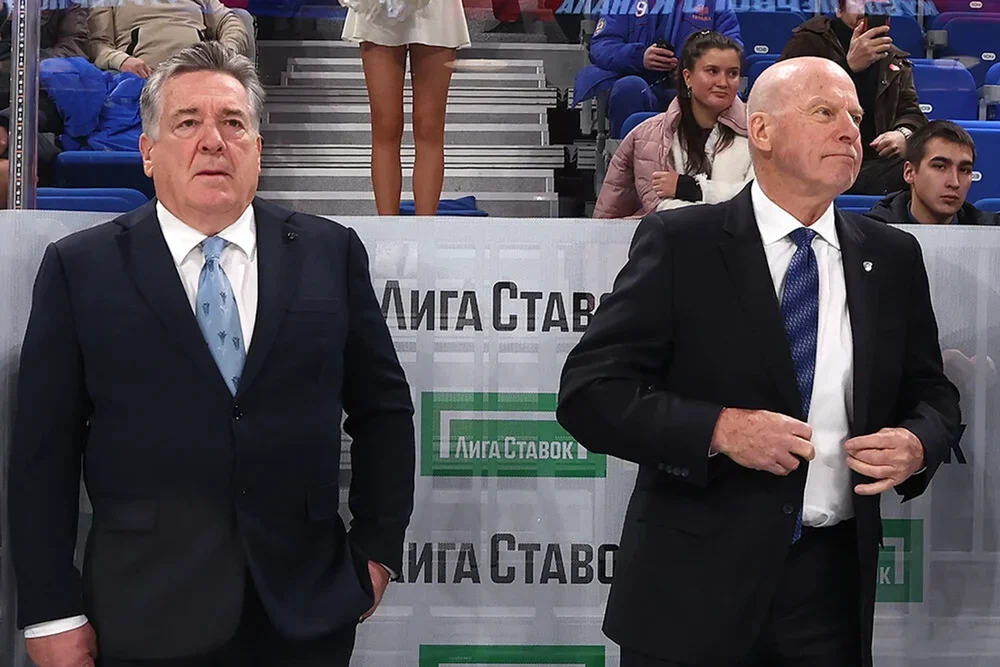

During the decisive playoff games of the KHL, all of which are broadcast by Kinopoisk, we highlight the heroes you need to know. Let’s start with Lokomotiv head coach Mike Pelino.
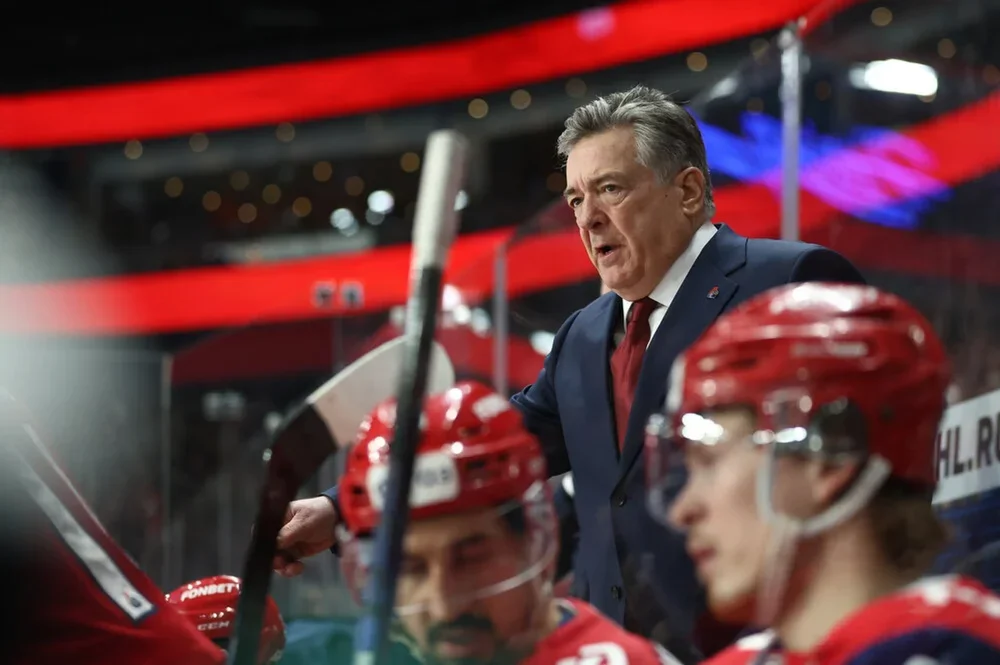
We met in Kazan in the winter of 2022, shortly before the Beijing Olympics. The KHL season had entered a prolonged break, and coaches not involved with national teams had time to talk to journalists. Upon meeting, Pelino, in North American fashion, flashed a wide smile, and in Russian tradition, extended his hand. “Hi, I’m Mike. How are you?”
He visually reminded me of Ben, the truck driver friend of Danila Bagrov from the movie “Brother-2.” A possible phone conversation with Dmitry Kvartalnov, who invited Pelino to Kazan midway through the 2021/22 season, immediately came to mind: “Mike, Mike! This is Dima. I need help.” And then, probably added: “The power play is a disaster.”
Indeed, that Ak Bars team had a terrible power play – second-to-last in the league at around 13%. Newcomer imports Jordan Weal, Per Lindholm, and Steven Kampfer struggled to adapt, the bets on Nikolai Kovalenko and Daniil Tarasov didn’t pay off, and even Danis Zaripov couldn’t find his groove. In December 2021, after a home loss to Barys and another toothless performance by the special teams, Ak Bars announced the hiring of Pelino. The Canadian coach provided consultations via Skype, and in the very next game, the team converted two power plays. Then five more in the following three games.
Magic, pure and simple.
“It’s not rocket science, nothing overly complicated here,” Mike later explained. “Speed, puck movement, playing in front of the net. You need the players to believe in your ideas and be confident in themselves, then everything works.”
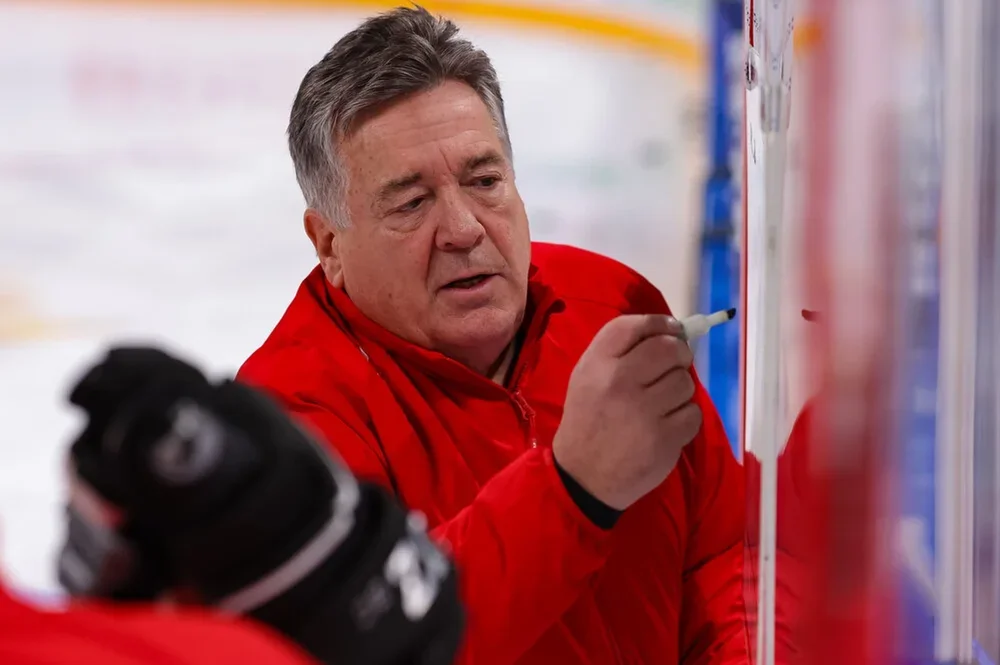
Pelino’s entire hockey journey seems magical and almost unbelievable. Mike, a former rugged defenseman, didn’t make it to the professional level and ended his playing career at 25. He became a schoolteacher and, in the evenings, assisted the coach of the OHL’s Toronto Marlboros. “Sometimes I had to sleep in my car. Road games ended late, and by the time I got back to my town, it was 3 or 4 in the morning. It was easier to doze off for a couple of hours in the car or in the hockey arena locker room, then go to teach classes. But I never missed a single game or a single school day in a year!” Pelino recalled.
A couple of seasons later, he became head coach at Brock University, and in 1991, he mustered the audacity to call Mike Keenan, who was preparing the Maple Leafs for the Canada Cup. “If you need any help – gathering statistics or just handing pucks to players during training camp – I’m ready,” Pelino offered. Keenan had coached him in junior and college teams and admired the defenseman’s dedication and commitment. One Mike made the other Mike an assistant to his assistants, allowing the young coach to gain experience from seniors and learn how to work with star players. Canada won, and that gold medal became the first of many for Pelino.
In total, he has won 10 tournaments with the national team. Some victories, like the Spengler Cup or the Nagano Cup, might not be earth-shattering, but there were serious successes. In 1997, Pelino assisted Mike Babcock at the World Junior Championship, where a very young Joe Thornton played for Canada. In 2002, he watched Mario Lemieux, without touching the puck with his stick, make arguably the best pass in Olympic final history, and in 2003, as part of Andy Murray’s coaching staff, won the senior World Championship. The collection lacks a medal from the U18 Worlds, but in the year Pelino became head coach, a 16-year-old Alexander Ovechkin came to Piešťany and psychologically broke the Canadians in the first game (two goals, Russia won 8-4).
In the Olympic season, Pelino, along with future Avangard coach Wayne Fleming, performed unnoticed groundwork – preparing scouting reports and communicating with players.