

A smartphone and a card / Pexels.

Digital documents are emerging as a convenient alternative to physical ID cards, enabling individuals to prove their identity electronically. This option is gaining traction among businesses and institutions looking to verify their clients quickly.
Starting in 2027, European citizens may no longer need to carry their physical national ID (DNI) or driver’s license when leaving home. The European Union is developing a unified system called the European Digital Identity Wallet (EUDI Wallet) to store official documents on smartphones.
This digital wallet is designed to securely hold a range of official credentials, including health cards, academic degrees, and certificates. Users will be able to share only the information required at a given moment—for example, proving they are over 18 without revealing their full identity or other personal data.
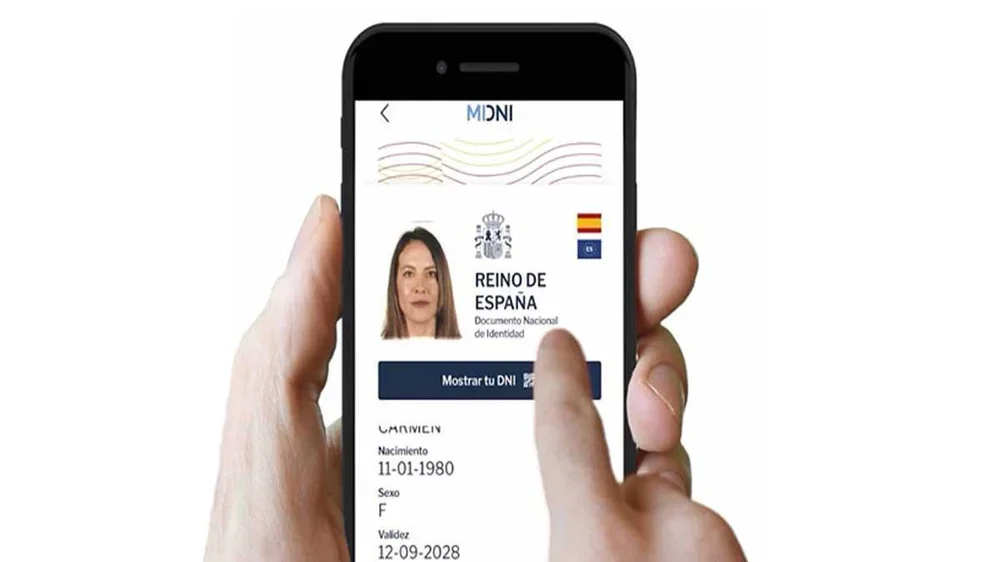
Preview of the digital DNI as it appears on a mobile phone.
“While the enrollment process handles detailed personal data, online services receive only a simple confirmation of age, ensuring privacy is maintained,” the EU official website explains.
The system will incorporate advanced security encryption, according to the European Commission. Once implemented, the digital wallet will be valid across all EU member states, simplifying cross-border administrative procedures without the need for additional registrations.
Physical ID documents will not be phased out immediately. The introduction of the digital version will be gradual, and timelines may vary from one country to another. The EU emphasizes that the change is not set to happen overnight, and local regulations may influence the roll-out.